
The Best Hair Extensions for Thin Hair: What You Need to Know

Updated: 3 days ago
If you have fine or thin hair, choosing the right hair extensions requires a little more care. The goal isn't simply to add as much hair as possible. The weight of the extensions, the extension method, placement, length, and the condition of your natural hair all matter.
The right extensions can add beautiful fullness and length while blending naturally with your own hair. But an extension method that works well for someone with thick, dense hair may be too heavy, bulky, or difficult to conceal on fine hair.
At Elite Extensions, we've specialized exclusively in professional hair extensions for more than 21 years, customizing hair extensions for women with fine and thinning hair. There are more options for extension methods than ever before. Here's what we believe you should know before choosing the best hair extensions for thin hair.

Why Choosing the Right Extensions for Thin Hair Matters
Fine or thin hair needs special consideration because individual strands may be more delicate, and there may be less natural hair available to support and conceal the extensions. Weight, placement, the extension method, and the amount of extension hair added all need to be considered.
For someone with fine or thin hair, the right extension method should:
Add fullness without placing unnecessary weight on the natural hair
Blend naturally with your existing density, color, and texture
Keep the extensions discreet and easy to conceal
Feel comfortable during everyday wear
Be customized to what your natural hair can safely support
Fine hair isn't the only reason women consider extensions. Hair extensions can also be customized to address thinning areas, hair breakage, lack of fullness through the ends, and other hair concerns.

One important distinction is that fine hair and thin hair aren't necessarily the same thing. Fine hair describes the diameter of the individual hair strands, while thin or low-density hair refers to having fewer strands of hair.
You can have very fine hair with reasonable density, or thicker individual strands with low density.
That difference matters when choosing hair extensions. Two women who both describe their hair as "thin" may need completely different amounts of extension hair, placement, and length.
Which Type of Hair Extensions Are Best for Thin, Fine Hair?
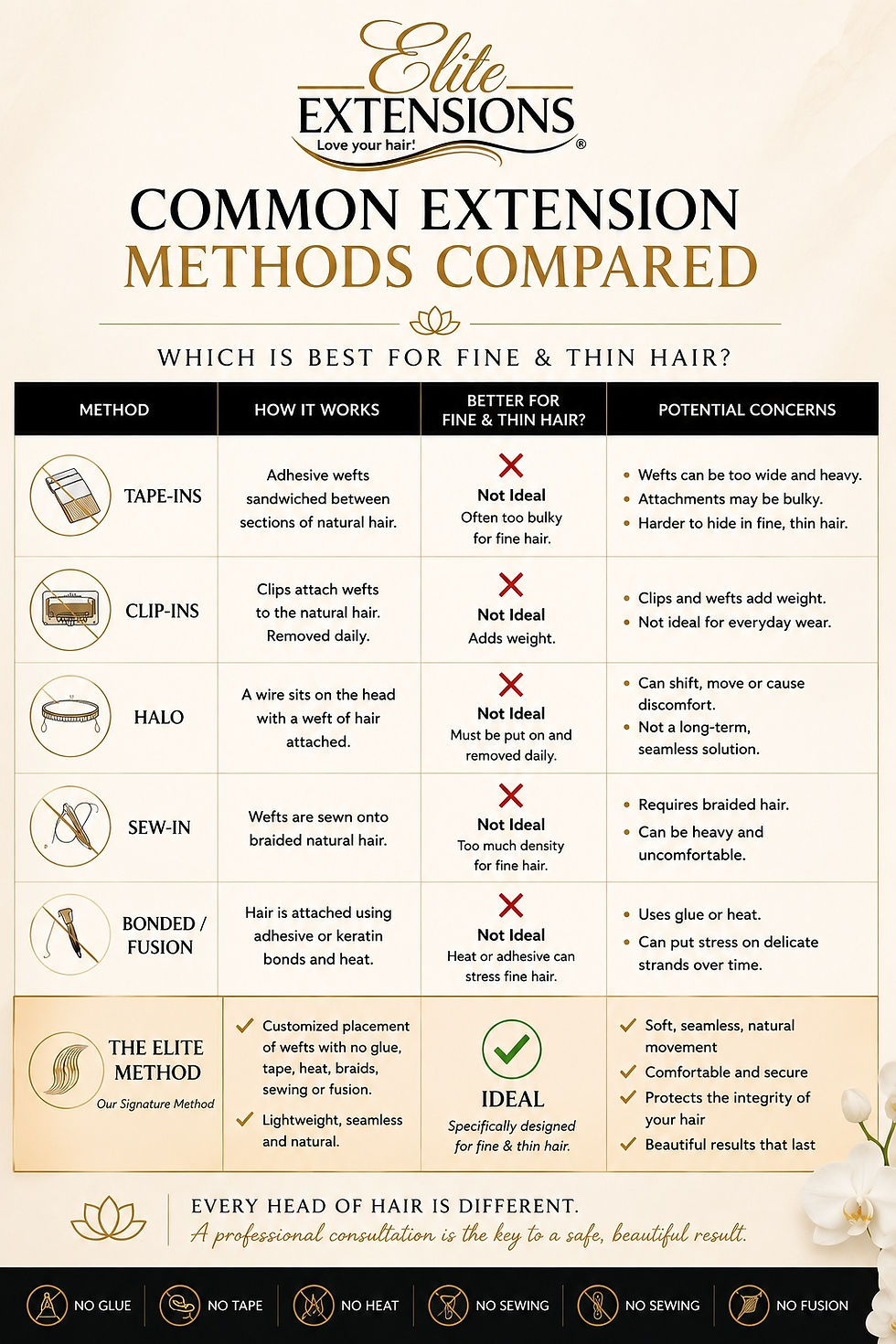
Fine and thin hair requires a different approach to hair extensions. The weight of the extensions, the extension method, placement, and how much natural hair is available to support them all matter. An extension method that works beautifully on thick, dense hair may be too heavy, bulky, or difficult to conceal on finer hair.
Here is how some of the most common extension methods compare for women with fine or thin hair.
Tape-In Hair Extensions
Tape-in extensions use adhesive strips to secure wefts of extension hair between sections of natural hair. Although they are commonly marketed for fine hair, the width and weight of the wefts can be too much for very fine or low-density hair. The wefts can also be difficult to conceal when there isn't enough natural hair to cover them.
Potential concerns for fine or thin hair:
Adhesive is used directly on the hair
Adhesive strips can feel heavy or bulky on delicate natural hair
Wide strips can be harder to conceal in low-density areas
Placement options may be limited when the hair is especially thin
Clip-In Hair Extensions
Clip-ins can provide temporary length and volume, but the clips and attached wefts add concentrated weight to the natural hair. Fine hair may also struggle to conceal the clips, especially around the sides or crown.
Because clip-ins need to be installed and removed each time they are worn, they are generally better suited to occasional use than to someone looking for an everyday extension solution.
Potential concerns for fine or thin hair:
Clips and wefts can be heavy
Clips place concentrated pressure on small sections of natural hair
Clips may be difficult to conceal in fine or low-density hair
Must be installed and removed each time they are worn
May not be comfortable for all-day, everyday wear
Halo Hair Extensions
Halo extensions don't attach directly to individual strands of natural hair. Instead, a weft of extension hair is supported by a thin wire that sits around the head.
Because the halo is supported by a wire rather than secured directly to the natural hair, it can be an option for temporary length and fullness. However, halos have drawbacks for women looking for an everyday, professionally installed extension solution.
The entire piece must be positioned each time it is worn, and some people find that the pressure from the wire or weight of the hair becomes uncomfortable or contributes to headaches.
Potential concerns:
Must be put on, positioned, and removed each day
Can shift or require adjustment
May feel uncomfortable or cause headaches for some wearers
Can be difficult to conceal in very fine or sparse areas
Doesn't provide the same everyday convenience as professionally installed extensions
Bonded or Fusion Hair Extensions
Bonded and fusion extensions use adhesive or keratin bonds to secure extension hair to sections of natural hair. With fine or thin hair, careful consideration of the weight, placement, and removal of the extensions is especially important.
At Elite Extensions, we prefer an extension method that does not require glue, bonding agents, or heat.
Sew-In Extensions
Traditional sew-in extensions generally require enough natural hair and density to support the braid and weft. The combined weight can make this extension method less suitable for clients with very fine, fragile, or low-density hair.
For someone with very fine hair, a customized extension method provides greater control over placement and the amount of weight the natural hair must support.
The Elite Method for Fine and Thin Hair
At Elite Extensions, we take a different approach. After more than 21 years specializing exclusively in hair extensions, we don't take a one-size-fits-all approach to fine or thin hair.
Our Elite Method allows us to customize the amount, weight, and placement of extension hair based on each client's natural hair density and condition. Our goal is to create comfortable, natural-looking fullness without placing unnecessary stress on delicate strands.
We use no glue, tape, heat, bonding, braiding, sewing, weaving, or fusing.
We can strategically place extensions where the natural hair can appropriately support them. This customized placement gives us greater control when creating fullness while keeping the extensions discreet and easy to conceal.
For clients with thin or fine hair, our goal isn't to attach as much hair as possible. It's to determine how much extension hair your natural hair can comfortably support, where it should be placed, and what length and fullness will give you a beautiful, natural-looking result.
That's why every new Elite Extensions client begins with a personalized consultation.
Every client deserves honest guidance, not a sales pitch. We evaluate the density, condition, texture, and areas of concern in your natural hair. If we don't believe hair extensions are the right choice for your hair, we'll tell you. Sometimes the best recommendation is to wait until your natural hair is ready for extensions.
Tips for Choosing the Right Color and Length
One of the biggest differences between extensions that look natural and extensions that look obvious is how well extensions work with your own hair.
Color matching: A good color match isn't necessarily one flat shade. Natural hair often contains several tones, so blending multiple extension colors can create a much more natural result.
An accurate color match is especially important with fine or thin hair because there may be less natural hair available to conceal and blend the extensions. Matching the color, tone, and dimension of your natural hair helps create a seamless, natural-looking result.
Length: When choosing length, longer isn't always better. The longer the extension hair, the more important it becomes to consider the density and condition of the natural hair supporting it.
For fine or thin hair, a slightly shorter length can sometimes create a fuller, more natural-looking result while keeping the overall amount of extension hair appropriate for your natural hair.
Texture: Extension hair should work with the natural texture and movement of your own hair. Proper blending is just as important as choosing the extensions themselves.
Work with an experienced hair extension specialist: Fine, thin hair leaves less room for error in weight and placement.
At Elite Extensions, your free hair extension consultation includes an evaluation of your natural hair and goals, plus a custom color match, to determine the right length and fullness for your hair.
For fine or thin hair in particular, the experience of the person installing your extensions matters just as much as the method itself. Read more about Why a Hair Extension Specialist Matters.
What Do Hair Extensions Look Like on Thin Hair?
When hair extensions are chosen and placed properly, thin hair can look naturally fuller without making you look like you're wearing extensions. The goal isn't always dramatic length. For many women with fine or thin hair, the biggest difference comes from adding density through the sides and ends, filling in sparse areas, and creating a fuller overall shape.
At Elite Extensions, we customize every extension appointment to the client's natural hair. We carefully consider your hair's density, texture, length, and condition, as well as the areas where you would like more fullness. We then adjust the amount and placement of extension hair based on what your natural hair can comfortably support, while keeping the extensions discreet and easy to conceal.
Color matching also makes a big difference. Rather than relying on a single shade, we can blend colors when needed to complement the natural variation in your hair and create a seamless transition between your own hair and the extensions.
Some of the most beautiful transformations on thin hair are also the most subtle. The finished result should move naturally, blend with your own hair, and let you style it without obvious signs that you're wearing extensions.
See what's possible with real Elite clients in our Hair Extension Before & After Gallery.
How to Care for Extensions and Fine Hair

Once you have your extensions, proper home care helps protect both your natural hair and your investment. Follow these hair extension care tips.
Use the right shampoos and conditioners: Use sulfate-free products and lukewarm water to gently cleanse both your natural hair and extensions. Avoid rubbing or twisting your hair while washing.
Instead, gently massage the shampoo through your hair and rinse thoroughly. A deep-conditioning treatment can also help keep your extensions soft, smooth, and manageable. For products we trust and recommend for extension care, visit our Elite Hair Extension Products page.
Avoid heavy oils and products: Heavy products can weigh down fine hair and cause buildup, especially when applied near the scalp.
Brush carefully: Brush your hair gently several times throughout the day to prevent tangling. Start at the ends and work your way up, supporting your hair as you brush.
Protect your hair from heat: You can curl, straighten, and style your extensions, but use a heat protectant and avoid extremely high temperatures on your styling tools.
Protect your extensions while sleeping: Secure your hair in a loose braid or ponytail before bed to help prevent tangling.
Keep your maintenance appointments: Follow the maintenance schedule recommended by your hair extension specialist. At Elite Extensions, most clients return every 2 to 3 months, depending on their natural hair growth, placement, and home care.
Wondering what happens to your natural hair while you're wearing extensions? Read The Truth About Hair Extensions and Hair Growth.
Frequently Asked Questions About Hair Extensions for Thin Hair
Q: Can you get hair extensions if your hair is very thin?
A: Possibly. Having thin hair doesn't automatically mean you can't wear hair extensions, but the condition and density of your natural hair need to be evaluated first. There must be enough healthy natural hair to appropriately support and conceal the extensions.
At Elite Extensions, we evaluate each client individually before recommending hair extensions. If your hair isn't currently able to support extensions, we'll tell you rather than risk putting unnecessary stress on your natural hair.
Q: What type of hair extensions are least damaging for thin hair?
A: There isn't one extension method that can be called the least damaging for every person with thin hair. The extension method, weight and amount of extension hair, placement, maintenance, home care, and the stylist's experience all affect how your natural hair responds.
At Elite Extensions, our Elite Method uses no glue, tape, heat, bonding, braiding, sewing, weaving, or fusion. Every customized set of extensions is carefully placed according to the client's natural hair density, condition, and the amount of hair it can comfortably support.
Q: Can hair extensions make thin hair look thicker?
A: Yes. Hair extensions can be used specifically to add fullness rather than dramatic length. For clients with thin hair, strategically adding hair through sparse areas, the sides, and the ends can create the appearance of thicker, fuller hair while maintaining a natural shape.
The amount of hair added should always be based on what the natural hair can comfortably support.
Q: How much extension hair should be added to fine hair?
A: There isn't a standard amount that's right for everyone. Two clients with fine hair may have very different densities, hair conditions, goals, and areas of concern, so each may need a different amount of extension hair.
At Elite Extensions, the amount of hair added is customized to your natural hair and what it can comfortably support. The goal is to create the fullness or length you want without adding more extension hair than your natural hair needs.
Q: Will hair extensions damage fine hair?
A: Hair extensions should never be treated as completely risk-free. Any extension method can potentially cause stress or damage if too much weight is added, the extensions are poorly placed, maintenance is neglected, or they are removed incorrectly.
This is one reason choosing an experienced extension specialist is particularly important for fine hair. Proper assessment, customized placement, appropriate weight, regular maintenance, and good home care all matter.
Q: How often do hair extensions for thin hair need maintenance?
A: Maintenance depends on the extension method, natural hair growth, placement, and home care. Elite Extensions clients typically return every two to three months for maintenance.
During maintenance appointments, your Elite Extensions are adjusted as your natural hair grows. With proper care, Elite's premium 100% Remy Human Hair extensions can often be reused two or three times.
Ready to Find Out if Hair Extensions Are Right for Your Hair?

Choosing hair extensions for thin hair isn't about finding the method that adds the most hair. It's about finding the right amount, weight, placement, length, and method for the hair you already have.
If you're considering extensions for fine or thin hair, start with a professional evaluation. At Elite Extensions, our hair extension specialists will meet you one-on-one for a private consultation.
We will look at your natural hair, discuss what you want to change, and give you an honest recommendation on what's appropriate for your hair.

Owner and Hair Extension Specialist, Elite Extensions
Lacy has specialized exclusively in professional hair extensions for more than 21 years, with particular experience creating customized solutions for fine and thinning hair.


Comments